
Étiquettes
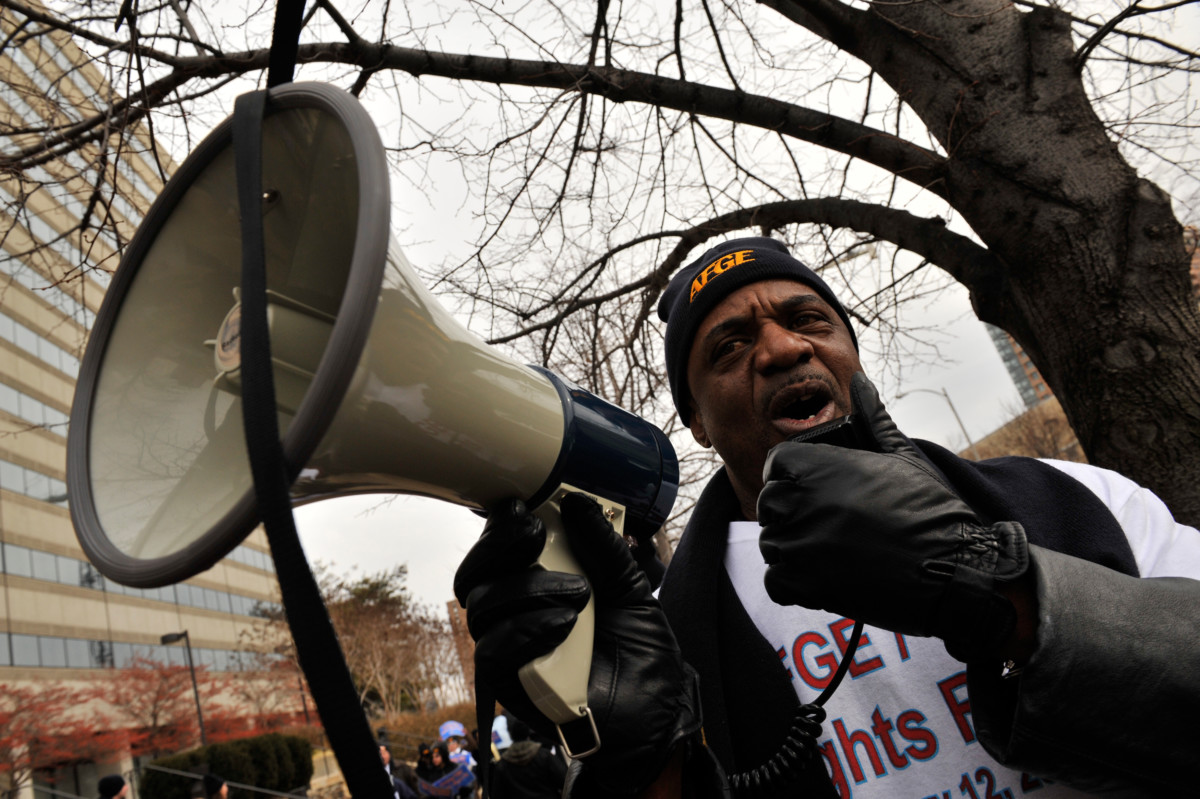
What comes next now that the Supreme Court’s conservative majority has upended over 40 years of labor law?
Erica Smiley, an organizing director at Jobs With Justice, told Truthout that in the wake of the Supreme Court’s Janus v. AFSCME ruling on Wednesday, which means that public sector unions can no longer require workers to pay dues, activists must work toward shifting labor law at the state level and challenging the current models of collective bargaining. It’s also imperative for labor organizers to increase union access for employees, she said.
The court’s 5-4 decision on Wednesday overturned 1977’s Abood v. Detroit Board of Education, the case that allowed unions to collect “fair-share” fees from members and use that money to collectively bargain on behalf of workers, whether they were represented by the union or not. Janus v. AFSCME was a 2015 lawsuit brought against the American Federation of State, County and Municipal Employees by Mark Janus, a child support specialist at the Illinois Department of Healthcare and Family Services who argued that he should be able to refrain from paying his fair-share fee. By ruling in Janus’s favor, the Supreme Court decided that unions violate their workers’ First Amendment rights by requiring them to pay the fees.
Like many of the Supreme Court’s recent decisions, the Janus v. AFSCME ruling has a racist edge.
“This Supreme Court case threatens all union workers, but Black people stand to lose the most,” Smiley told Truthout. “The dog whistle attacks on public sector employees has long had a sharp racist edge, not only undermining the institutions of government but equating public servants as “lazy free-loaders” — terms often used against communities of color to justify ill treatment.”
A Blow to Organized Labor
Many in the labor movement viewed this decision as inevitable ever since Trump took office and were further convinced of this point after he picked conservative Neil Gorsuch to fill the empty seat created by Antonin Scalia’s death. Expecting it certainly did not make the ruling any less devastating for labor activists and leaders.
“The Supreme Court has dealt a blow not just to public sector unions, but to democracy itself,” said Richard Kahlenberg, a senior fellow at The Century Foundation and co-author of the book, Why Labor Organizing Should be a Civil Right. “Unions serve democracy by providing a check on arbitrary government power, sustaining a middle-class society and acculturating workers to democratic norms. At a time when many pillars of our democracy are under assault, we need to strengthen, not weaken, America’s trade union movement. One step Congress could take: amending the Civil Rights Act so that it prohibits discrimination against workers trying to organize a union.”
The Racist Roots of Janus
The Supreme Court’s Janus decision comes just two days after the court upheld Trump’s travel ban, which targets Muslim-majority nations. While some might struggle to find a connection between a xenophobic executive order being confirmed and a ruling regarding union dues, racist parallels exist.
 Groupe Gaulliste Sceaux