
Étiquettes
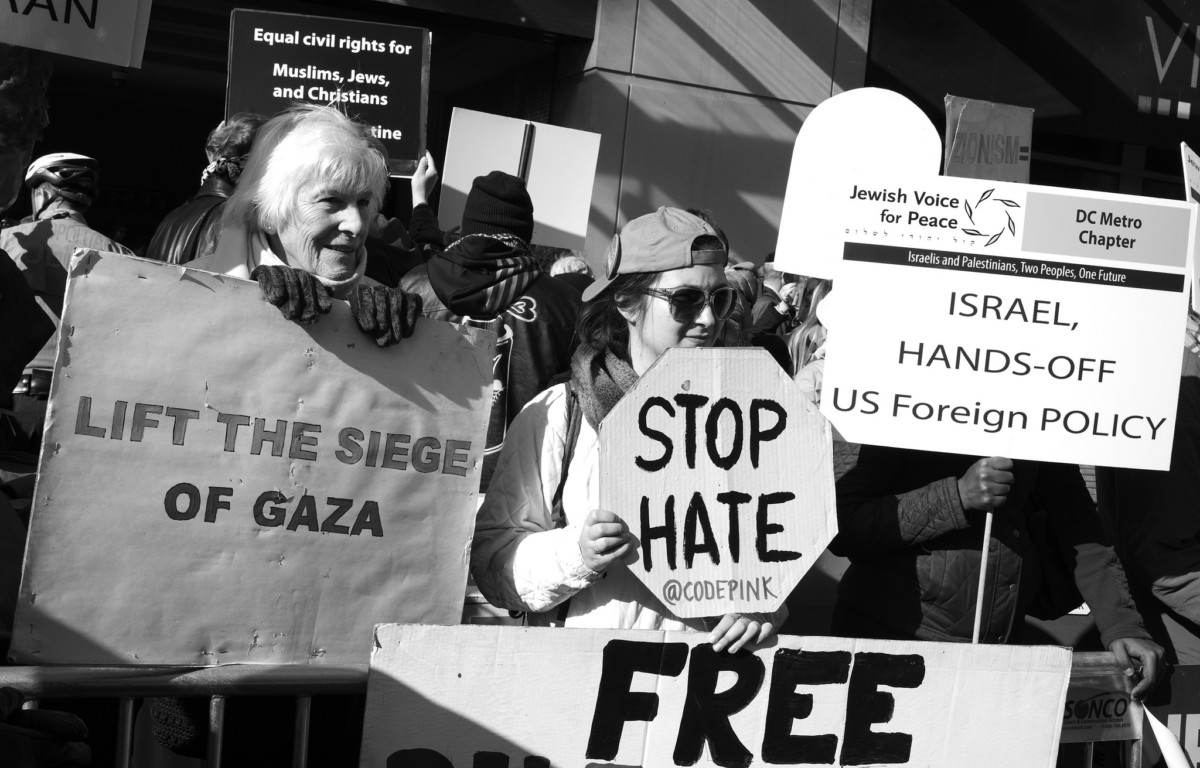
A sentiment I hear frequently articulated in some progressive Jewish spaces is that the left needs to be more concerned about anti-Semitism. This view posits that the left has not been sufficiently sensitive to recognizing and addressing Jewish suffering and anti-Semitism.
As a Jew who identifies as being part of the left, I have two main concerns with this formulation. For one, it is unclear who exactly is being referred to here (sometimes the description is “non-Jewish leftists”). Do people mean feminists of color who are organizing for racial justice? Prison abolition groups? Mostly white anti-racist groups? Immigrant rights organizers? Everyone in all those categories? I am not sure why the left, which has so many layers and dimensions to it, is lumped together as all being insensitive to Jews.
A second and bigger problem I have with this framing is why anti-Semitism is being singled out as a particular problem in cases where other injustices aren’t mentioned. I fully appreciate that these discussions come at a particular moment in which we are seeing an upsurge in anti-Semitism amongst white supremacists in this country. However, the way anti-Semitism is called out as a particular problem suggests that the “left” is more prone to being insensitive to anti-Semitism than it is, for example, to Islamophobia (or that it is more likely to lack compassion for Jews than for Muslims). What about classism as another of many examples of a real problem in some left spaces? Since the social justice communities that many of us are part of exist within the context of a broader society ripe with all forms of injustice, we will invariably see some, if not much, of that mirrored within our own spaces. Challenging these systems of oppression within our communities demands our attention, and this includes (but is not limited to) addressing anti-Semitism.
The arguments about anti-Semitism on the left are framed from a position of a commitment to racial justice — and I have no doubt that commitment is often true. But I believe that singling out anti-Semitism specifically in this way ends up feeding into a false and distorted narrative, which claims that nobody (on the left or otherwise) understands anti-Semitism or Jewish suffering.
It seems that there are a few things at work that promote this narrative. One is that, as the Palestinian and global call for Boycott, Divestment and Sanctions (BDS) becomes more prominent and pervasive in social justice communities, and as Zionism becomes more fully recognized as one of the many injustices that needs to be challenged, supporters of Israel increasingly conflate anti-Zionism with being insensitive (or worse) to Jews and Jewish suffering.
This conflation is also true among some progressive and leftist Jews. Numerous groups and individuals may articulate strong opposition to the Israeli occupation of 1967, but are deeply uncomfortable with an anti-Zionist framework that addresses the injustices of 1948 (the Nakba, or the catastrophe that resulted in the displacement and expulsion of 750,000 Palestinians from their lands and homes before and during Israel’s creation).
There are also some Jewish progressive or leftist individuals and organizations that operate from a racial justice analysis and praxis that is only local or domestic, which excludes addressing Zionism as a form of racism; this contrasts with the many social justice movements today whose principles fundamentally connect the local to the global, compelling solidarity with Palestinians as integral to the work and ensuring that it is not excluded from racial justice spaces.
 Groupe Gaulliste Sceaux