
Étiquettes
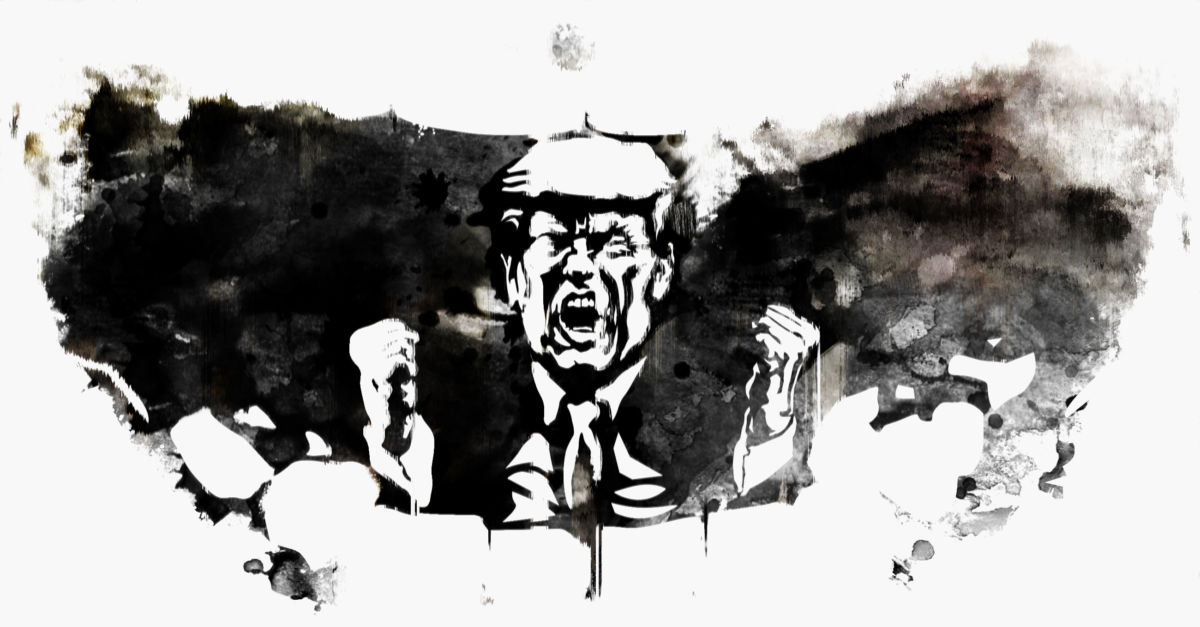
Fascism first begins with linguistic violence and then gains momentum as an organizing force for shaping a culture that legitimates indiscriminate violence against entire groups — Black people, immigrants, Jews, Muslims and others considered “disposable.” In this vein, Trump portrays his critics as “villains” and “enemies,” describes immigrants as “losers” and “criminals,” and has become a national mouthpiece for violent nationalists and a myriad of extremists who trade in hate and violence. Using a rhetoric of hate as a performance strategy to whip up his base, Trump employs endless rhetorical tropes of hate and demonization that set the tone for real violence.
Trump appears utterly unconcerned by the accusation that his highly charged rhetoric of racial hatred, xenophobia and virulent nationalism both legitimates and fuels acts of violence. He proceeds without concern about the consequences of lending his voice to conspiracy theorists claiming that George Soros is funding the caravan of migrant workers, calling Maxine Waters a “low IQ person,” or referring to former CIA director John Brennan as a “total lowlife” and a “very bad guy.” Meanwhile, this inflammatory invective promotes violence from the numerous fascist groups that support him.
Trump thrives on promoting social divisions and often references violence as a means of addressing them. His praise of Montana congressman Greg Gianforte for body slamming a Guardian reporter in 2017 speaks for itself, as does his remark that the neo-Nazi protesters in Charlottesville were “very fine people.” No wonder Trump is praised by David Duke, the former head of the Ku Klux Klan, and by the Proud Boys (a vile contemporary version of the Nazi Brownshirts). Needless to say, as Karen Garcia notes, Trump’s “frenzied Nuremberg-style rallies” are a cauldron of race baiting and anti-Semitic demagoguery.
We have seen before this collapse of language into a form of coded militarism and racism — the anti-Semitism couched in critiques of globalization, the call for racial and social cleansing couched in the discourse of borders and walls. The emerging discourse of state terrorism in the US alarmingly resembles that of Europe in the 1930s. Edward Luce rightly reminds us that we have heard this language before. He writes: “Eighty-five years ago on Thursday, Heinrich Himmler opened the Nazi’s first concentrating camp at Dachau. History does not repeat itself. But it is laced with warnings.”
 Groupe Gaulliste Sceaux