
Étiquettes
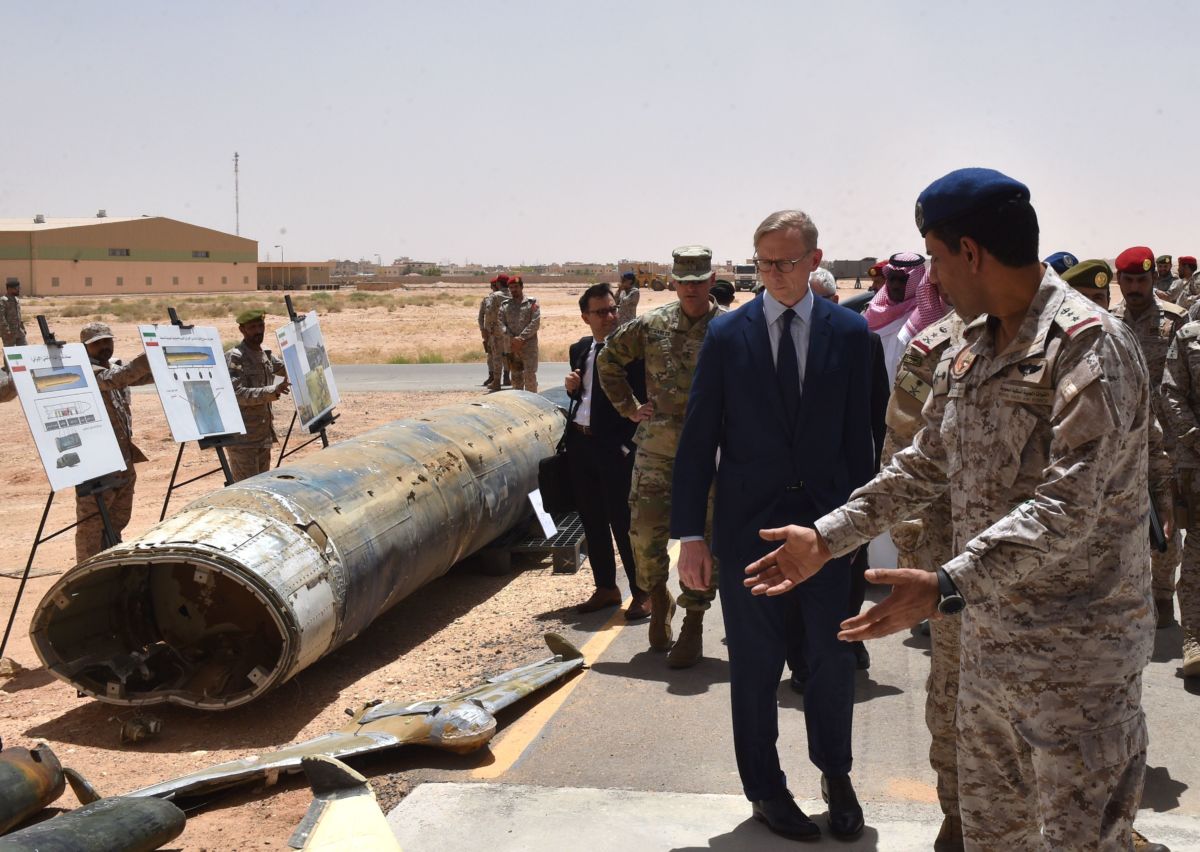
The New York Times is reporting that on June 20, President Trump ordered military strikes against Iran to retaliate for its shootdown of a U.S. drone, but then pulled back and didn’t launch them. Officials told the Times that Trump had approved attacks on Iranian radar and missile batteries.
Trump tweeted, “We were cocked & loaded to retaliate last night on 3 different sights when I asked, how many will die. 150 people, sir, was the answer from a General. 10 minutes before the strike I stopped it, not proportionate to shooting down an unmanned drone.”
Nevertheless, shortly after midnight on June 21, Newsweek reported that regional U.S. military assets have been put on 72-hour standby.
Iran has the legal right to control its own airspace. The United States has no lawful claim of self-defense that would justify a military attack on Iran.
Both the U.S. and Iran are parties to the Chicago Convention on International Civil Aviation, which provides “that every State has complete and exclusive sovereignty over the airspace above its territory.”
Iran’s sovereignty over its airspace includes the right to shoot down an unmanned drone present without consent. “Although there is no black letter law on the question, state practice suggests that a state can use force against unmanned drones that have entered its airspace without consent,” Ashley Deeks and Scott R. Anderson wrote at Lawfare.
“Assuming that for once Washington is telling the truth” about how far the U.S. drone was from Iran when it was downed, “it is still undeniable that Iran has the right to demand identification from any aircraft flying this near its territory,” H. Bruce Franklin, former Air Force navigator and intelligence officer, wrote on Facebook. U.S. Air Defense Identification Zones extend 200 miles from the U.S. border. “Any unidentified drone” which flew that close to the U.S. “would most likely be shot down,” Franklin added.
Iran’s ambassador to the United Nations, Majid Takht-Ravanchi, wrote to the Security Council that the drone did not respond to several radio warnings before it was shot down.
A U.S. Attack on Iran Would Not Be Lawful Self-Defense
If the United States attacks Iran, it would act in violation of the United Nations Charter. The Charter only allows the use of military force in self-defense after an armed attack or with Security Council approval.
 Groupe Gaulliste Sceaux