
Étiquettes
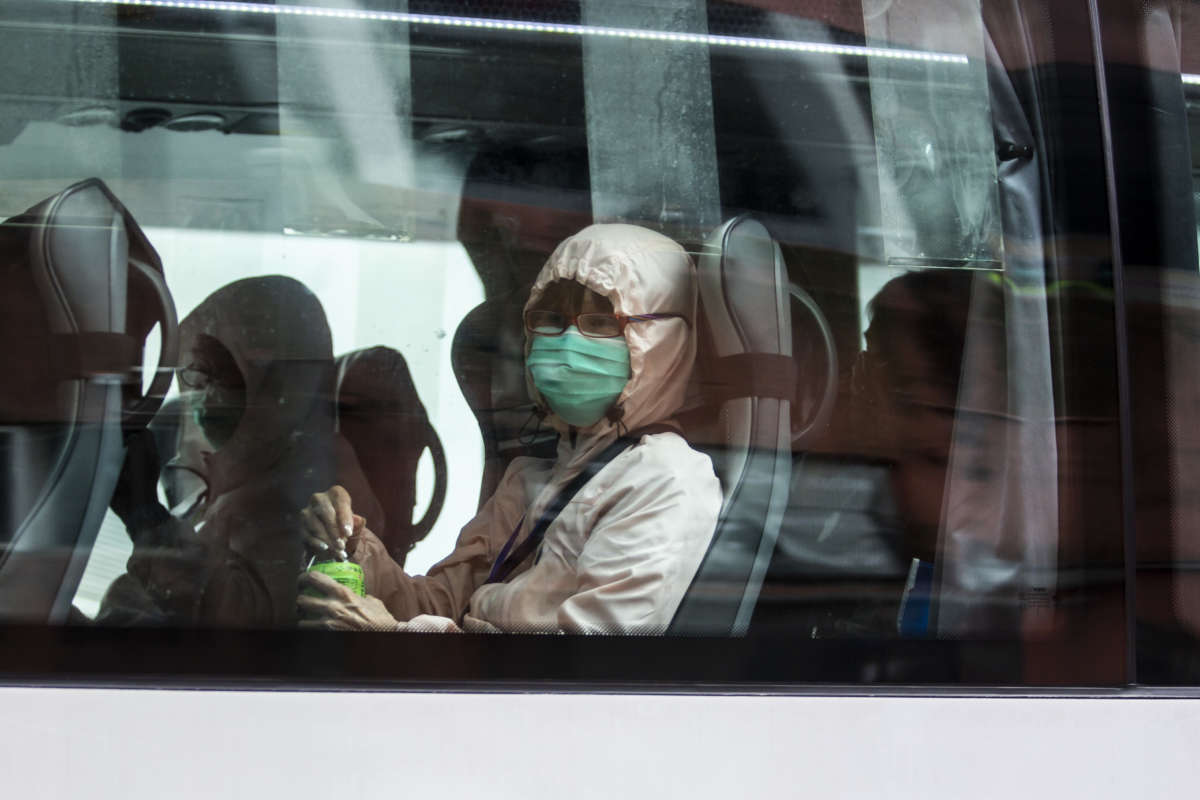
As global fears around the coronavirus outbreak intensify, the United States and many other countries have opted for wholesale travel bans of Chinese nationals as well as foreign nationals who have recently been to China, and for mass quarantines of U.S. citizens returning from impacted parts of China.
This Friday, Kuwait announced restrictions on travel in and out of Iran. Israel banned South Koreans from entering the country. North Korea began quarantining all foreigners in the country. Meanwhile, violent protesters in Ukraine tried to block the return of Ukrainians being repatriated from Wuhan province, China, out of fear the disease would spread in the Ukraine too. And cities in California sued to block the establishment of quarantine facilities in their neighborhoods.
Around the world, virus hotspots are now flaring up, in Iran, in Italy, in South Korea. In each case, we are seeing quarantines and strict movement restrictions imposed, the shuttering of schools, the banning of public gatherings — and, at the same time, increasingly panicked public reactions — from panic buying at supermarkets to sell-offs in stock markets. On Monday, markets around the world plummeted, making a global economic downturn far more likely.
Meanwhile, some states are also imposing their own wildly broad quarantines, such as the Pennsylvania Department of Health, which forced 16 students — none of whom showed any symptoms of illness — into a mandatory 14-day quarantine at Franklin and Marshall College in Lancaster simply because they had traveled to China during their winter break. In New York City, Barnard College has also quarantined students; and on other campuses students are being encouraged to self-quarantine if they have recently returned from a hot zone.
There is a long history of sweeping quarantines in the U.S. During the deadly Spanish flu pandemic just over a century ago, U.S. cities imposed draconian limits on public gatherings, shuttering saloons, dance halls and other places where crowds congregated. They also staggered workplace hours to limit how many people would be in a factory at any one time and discouraged the use of public transport. In many ways, these restrictions were precursors of the emergency rules that Chinese authorities have put in place in recent weeks in cities such as Wuhan — rules that may not necessarily be the most effective way to contain the epidemic.
 Groupe Gaulliste Sceaux